
CAROLINE SCHOFIELD
Eco-Psychology Practitioner, Artist and Eco-Therapist

-
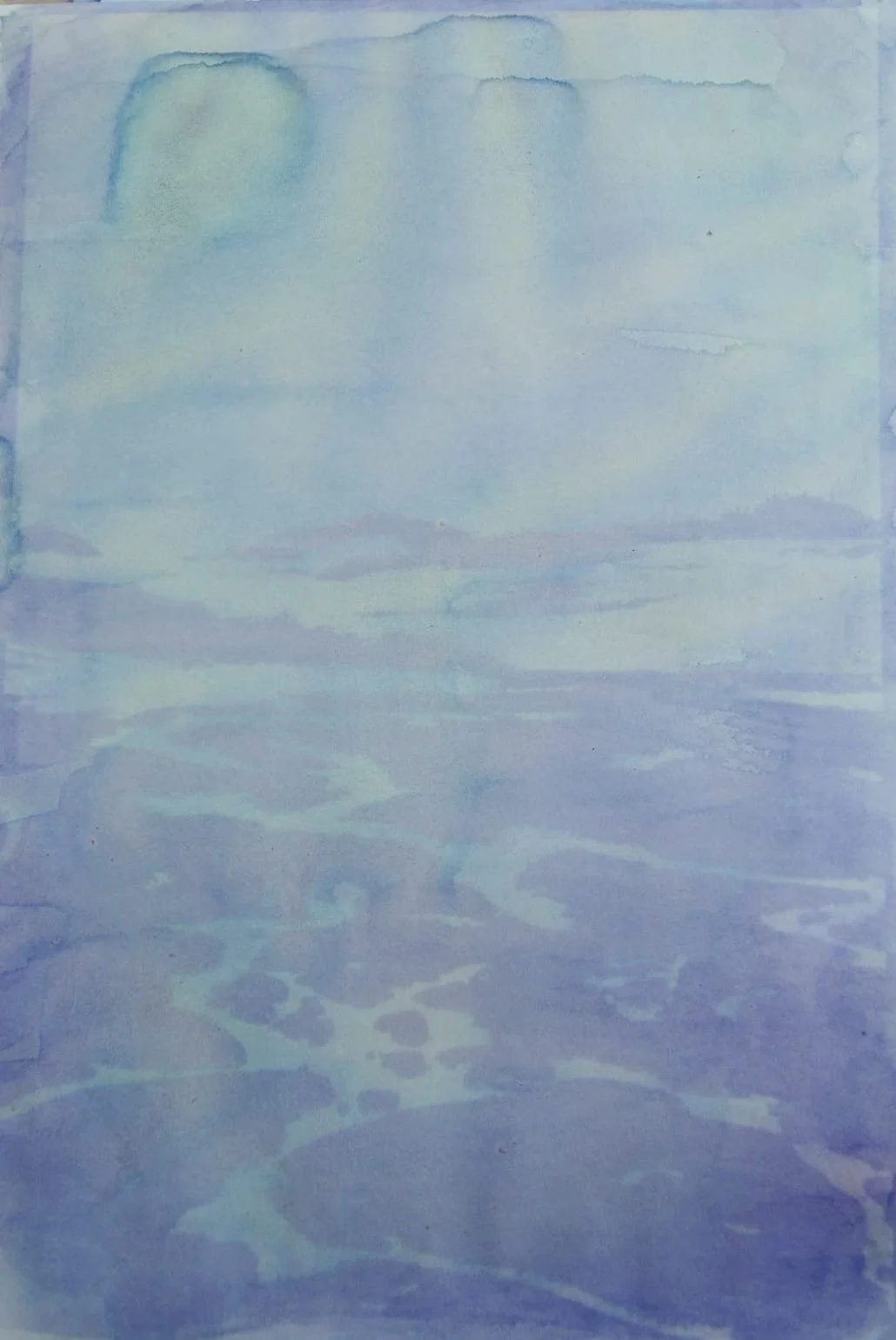
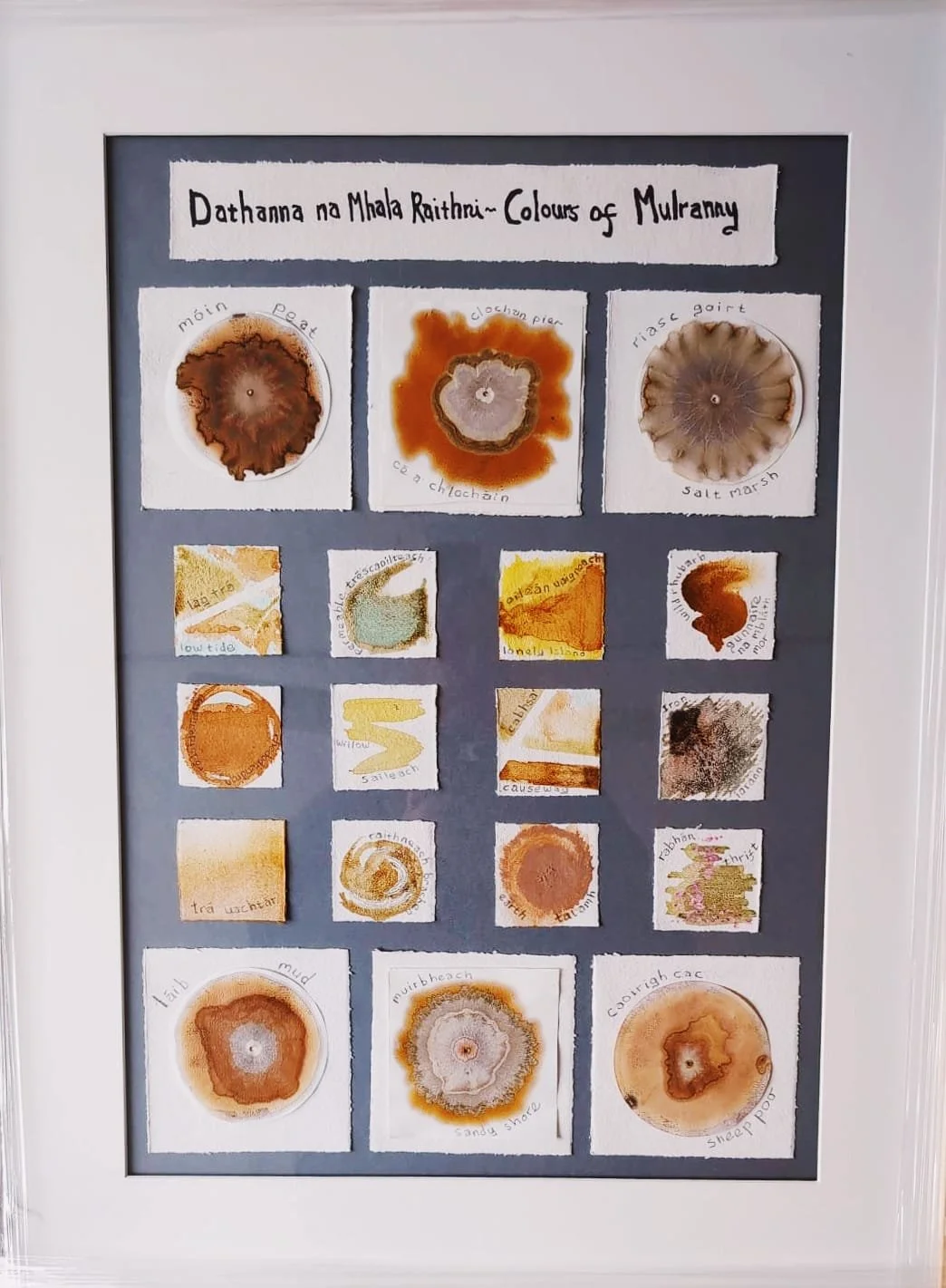
My practice is rooted in a slow, deliberate engagement with the land and place. Returning to Mulranny Arts for a second residency, I continued my exploration of natural pigments, moving away from standardised, acrylic /plastic-based paints in favour of materials tied directly to the earth. This year, my research expanded to include seaweed-based botanical inks, clay, shale, and peat. I also made gesso to prime canvas using carrageenan (Irish moss), replacing modern acrylic primers with a sustainable, site-specific alternative.
Working with foraged pigments is a resistance to convenience. Unlike commercial paints, these materials possess unique, often unpredictable qualities that require individual patience and understanding. This process demands that I slow down, fostering an emotional intimacy with the place I am inhabiting. For me working with these natural materials act as a conduit, allowing me to explore the delicate intersections of beauty, loss, and environmental change.
-
-
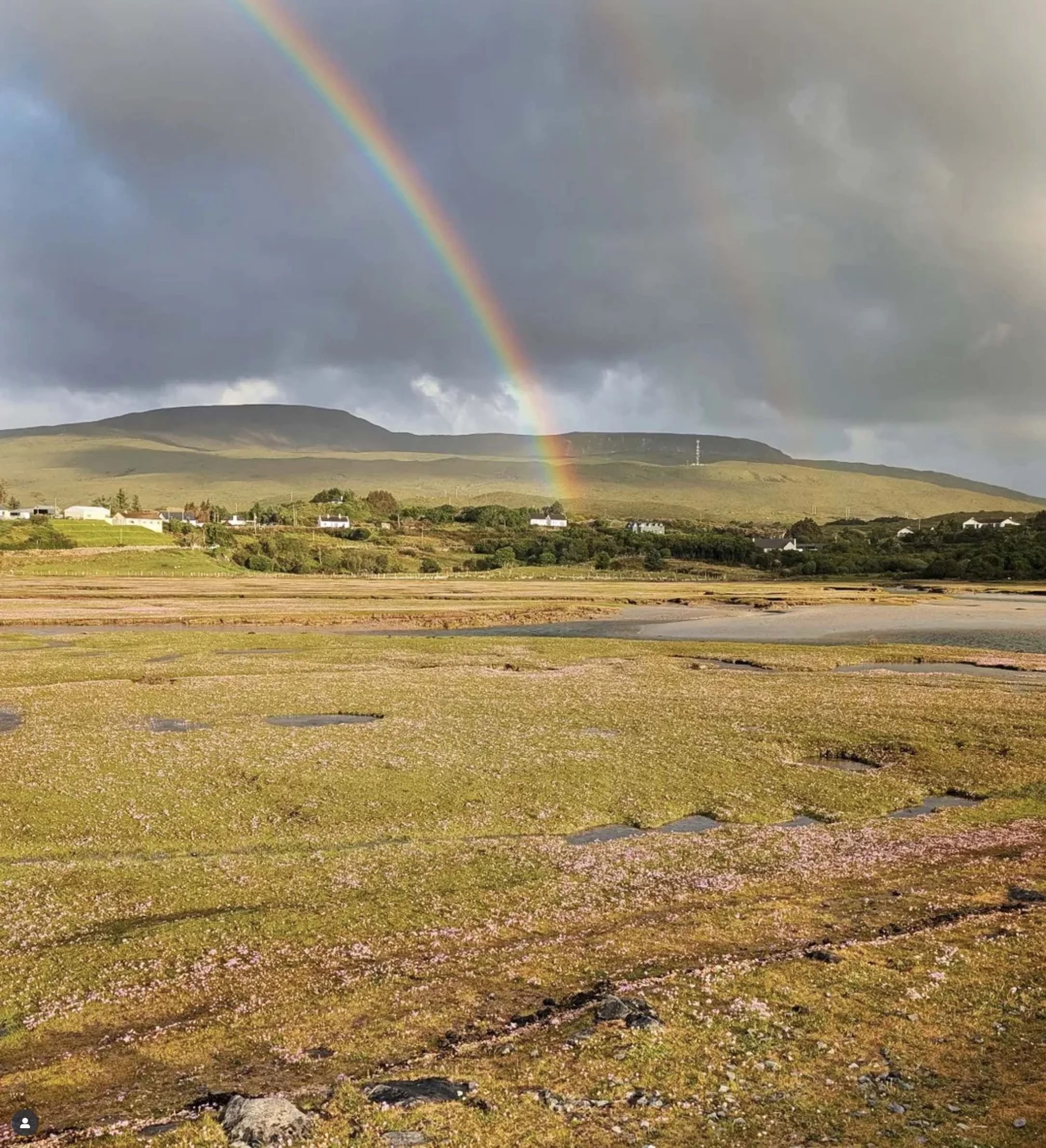
It was such a privilege to spend time at Mulranny Arts. My creative practice as an artist and eco-therapist comes from being immersed with place over time, a month’s residency is a wonderful way to experience and feel into a place. During my residency I worked for natural pigment, both from plants and earth minerals. Rhododendron, bracken and willow were abundant and gave a range of colour both for ink and also as an emulsion for Anthotype (a photographic process using light sensitive plant pigment). I also worked with making paint from pigment collected from the exposed land along the shoreline. For me getting to know a place is about connecting with the land, the people and other ‘more than human’ inhabitants. I was fortunate to have opportunities to meet people, to find out about the old Irish goats, to learn about Irish words for the landscape and local places and spend time with and learn about the salt marsh.
I was inspired by the local heritage, the ecological and geological richness of the area and by the efforts of people to work for a sustainable future for the community and for the land. The history of loss and potential of future loss alongside the commitment to caring for, preserving, and regeneration felt very real to me during my time there. I am continuing to create work with the pigments I have bought back to North Wales as a way to reflect on my experience in Mulranny .
I am looking forward to returning in 2026 to continue my arts- based research in Mulranny, to deepen into my work with Earth pigments and share this process with others.
-